
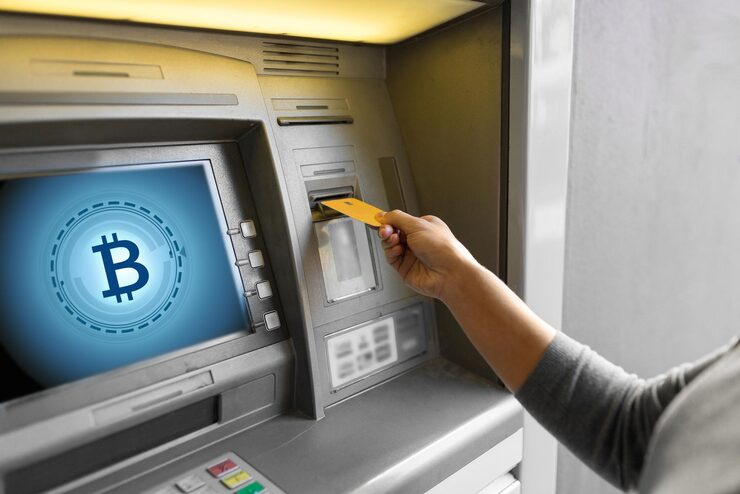
Buy Crypto With Cash in Baltimore
If notes in your pocket are the only instrument you have, you still have three working options in this city — and they differ by up to twelve percentage points in cost. Here is which is which, what ID you will be asked for, and how to avoid the flows built to fleece cash buyers.
If you can deposit the cash at your own bank first, a licensed exchange like CEX.IO (FinCEN-registered, NMLS ID 1804170) costs a fraction of any cash route on this page.
Cash-to-crypto is the most Baltimore-specific part of this whole site. Roughly one in ten households in the city has no bank account, and a considerably larger share is underbanked — using cheque cashers and prepaid products rather than a chequing account with ACH origination. That is precisely the population kiosk networks target, and it explains why this city carries such an unusual density of machines relative to its size.
We are not going to pretend cash routes are a bad idea for everyone. For somebody without a bank account, they are the only door. But cash buyers pay the highest prices in crypto, and they are targeted by the most aggressive fraud in the sector. Both problems are manageable once you know the terrain.
If you have any account that accepts a cash deposit — a bank, a credit union, even a prepaid product with ACH — depositing the notes and buying on a licensed exchange will cost you roughly one to three percent instead of ten to twenty. That single step is worth more than every optimisation below combined. If the answer is genuinely no, read on.
The three cash routes in Baltimore
1. Virtual currency kiosks — fastest, most expensive
The machines. Around 124 inside city limits from about ten operators, concentrated in convenience stores, tobacco and vape shops, liquor stores and gas stations along commercial corridors — Eastern Avenue, Belair Road, Liberty Heights, Broadway in Fells Point, York Road north of Govans. You verify at the machine, scan your wallet address, feed in notes, and coin arrives on-chain within minutes.
Markups on Baltimore screens usually sit between 9% and 20%, with a flat network fee of about $2.49 to $2.99 on top. The flat fee is why small kiosk purchases are so bad in percentage terms — three dollars on a fifty-dollar buy is another six percent before the markup even applies. Our kiosk guide covers operator differences and our fee guide has the arithmetic.
2. Cashier-assisted retail counters — cheaper, smaller
Less visible and often better value. Coinme powers a large network of retail locations across Maryland — several hundred statewide, with a substantial cluster in and around Baltimore — where a cashier processes your cash and you complete the purchase in the operator app. Because the store already handles money-services transactions, the crypto markup layered on top tends to be gentler than a standalone machine, commonly in the 7% to 13% range.
The limitations are real: lower caps, dependence on a clerk who may be doing this for the third time ever, and a two-step flow where the cash and the crypto redemption are separated. Do not leave the store until the balance appears in the app. If something has not landed, the person who took your money is standing right there — a meaningful advantage over a machine that has already swallowed your notes.
3. Voucher and money-transfer style top-ups
A variation on the above: you pay cash at a counter, receive a code or voucher, and redeem it into a wallet or exchange balance later. Useful when you want to buy now and decide later, and the receipt trail is usually good. The catch is that voucher flows are the single most abused mechanism in crypto fraud, because a code can be read out over the phone. Which brings us to the part of this page that matters most.
| Route | Typical all-in | Practical limit | ID required |
|---|---|---|---|
| Kiosk | 9%–21% + network fee | Up to $15,000/day at top tier | Phone, then ID + selfie |
| Retail counter | 7%–13% | Usually low hundreds to low thousands | Phone, then ID |
| Voucher / code | 7%–15% | Set per product | Phone or ID at redemption |
| Bank deposit → exchange | 0.25%–3.5% | High | Full verification once |
Cash buyers are the primary fraud target — here is the playbook
Every police warning about crypto in this region follows the same shape, and cash is always the instrument. Somebody calls claiming to be from a court, a utility, the Social Security office, a sheriff's warrant division, or your own bank's "fraud department". There is urgency. There is a threat. And the resolution always involves you taking physical cash to a machine or a counter and following instructions on the phone.
No court, police department, utility, tax authority or bank in the United States will ever ask you to resolve anything by depositing cash into a crypto kiosk or reading a voucher code over the phone. Not to clear a warrant, not to protect an account, not to pay a fine. If that is the instruction, it is fraud, one hundred percent of the time. Hang up.
- Anyone staying on the phone with you while you stand at the machine
- A QR code you were sent, printed, or found taped near the screen
- Pressure to complete the transaction before a deadline that is minutes away
- An offer to "help" from a stranger in the store, or a helpful new online friend
- A job, rental deposit or romance that requires you to send crypto first
Maryland's 2026 kiosk regulations added a Notice of Fraud process letting a user request a refund of fees paid on a fraudulent transaction, and required receipts to carry those instructions. That is a genuine improvement, but note what it covers: fees. The coin itself moves on-chain and is gone. Prevention is the only reliable protection. More local patterns in our Baltimore scam guide.
How to make a cash purchase go smoothly
Wallet at home, backed up on paper
Install it, write the recovery phrase down, screenshot nothing. Bring the receive QR code ready on your phone or printed.
Choose the location before you leave
Check the operator's own location page for hours and machine status. A staffed, well-lit interior in a busy shop, in daylight, is worth a longer drive.
Bring clean, flat notes
Worn and folded bills are the most common cause of a rejected deposit, especially on older downtown units. Twenties are the most reliably accepted denomination.
Read the confirmation screen
Compare the crypto amount you will receive against the live price on your phone. If it is worse than you expected, cancel — nothing has been spent yet.
Take the receipt and keep it
It carries the transaction reference and the fraud-refund instructions Maryland now requires. It is also your cost basis for tax purposes.
If you can bank the cash, do
Deposit at your own institution, then buy on a licensed exchange. CEX.IO is registered with FinCEN as a money services business and licensed as a money transmitter under NMLS ID 1804170 — verifiable, documented, and a fraction of any cash route above.
Cash buying questions
Can I buy Bitcoin with cash in Baltimore?
Yes. There are three working cash routes in the city: a virtual currency kiosk, a Coinme-powered retail counter where a cashier processes the cash, and a voucher or money-transfer style top-up redeemed in an operator app. All three require at least phone verification, and ID above small amounts.
Is there a way to buy crypto with cash and no ID in Baltimore?
No legitimate one. Every operator with a real presence here runs tiered identity checks starting at phone verification, and Maryland kiosk regulations push documentation further rather than back. Anyone offering a no-ID cash swap is running a scam or laundering money, and deliberately splitting purchases to dodge thresholds is itself a federal offence.
What is the cheapest cash route in Baltimore?
Cashier-assisted retail top-ups usually price below full kiosk markups, roughly in the 7 to 13 percent band versus 9 to 21 percent at a machine. The genuinely cheapest option is to deposit the cash at your own bank and buy on a licensed exchange, which costs a fraction of either.
How much cash can I use per day?
It depends on your verification tier and the individual machine. Entry tiers are commonly a few hundred dollars, mid tiers land around $1,000 to $3,000, and fully verified users on some networks can reach up to $15,000 a day. Note-acceptance limits per session are often much lower than the daily cap.
Do I need a wallet to buy with cash?
For a kiosk, yes — the machine sends coin to an address you scan, so the wallet must exist and be backed up before you go. For app-based retail top-ups the operator can hold the balance briefly, but you should still withdraw to your own wallet afterwards.