
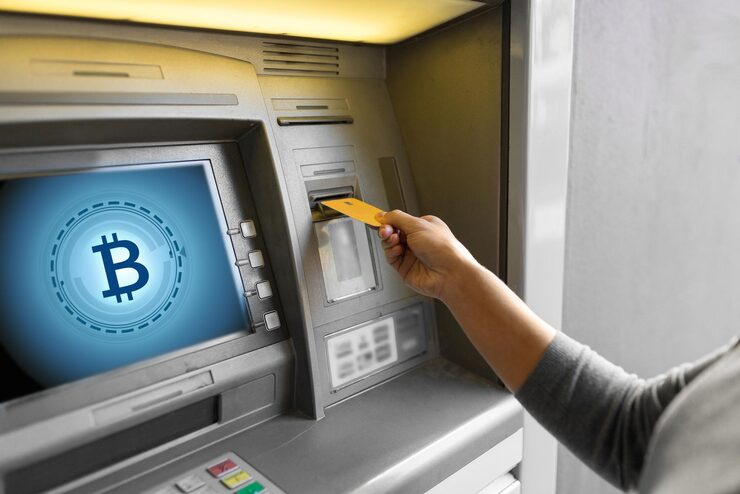
Buy Crypto With a Prepaid Card in Baltimore
The most useful page on this site for anyone without a bank account. Get this right and a prepaid card turns cash into exchange pricing — roughly four percent instead of the fifteen a machine on Liberty Heights would charge. Get it wrong and the card just gets declined.
CEX.IO is registered with FinCEN as a money services business and licensed as a US money transmitter (NMLS ID 1804170).
Baltimore has one of the higher unbanked and underbanked rates among large American cities. That single fact explains the extraordinary density of crypto kiosks here — well over a hundred machines inside city limits — and it explains why so many residents end up paying the highest prices in crypto for no reason other than the absence of a chequing account.
There is a bridge that a lot of people miss, and it is worth spelling out plainly: a reloadable prepaid card accepted at a licensed exchange lets you convert physical cash into crypto at something close to card pricing. You are not stuck choosing between a bank you do not have and a machine charging fifteen percent.
Load $500 of cash onto a reloadable prepaid card at a retail counter for a typical reload fee of about $4.95, then buy on an exchange at a card rate of roughly 2.9%. Total cost: around $19, or under 4%. The same $500 at a mid-range Baltimore kiosk costs about $78. You keep roughly $59 more Bitcoin for the same cash and one extra errand.
Which prepaid cards actually clear
Exchanges are not hostile to prepaid cards out of snobbery. They decline them because prepaid products have historically carried elevated fraud rates, and because many of them cannot be matched to a verified identity. Understanding that logic tells you exactly which cards work.
| Card type | Likelihood | Why |
|---|---|---|
| Registered reloadable prepaidYour legal name, your Baltimore address on file | Good | Passes name and address verification; behaves like a debit card |
| Payroll or benefits card | Moderate | Usually registered, but some programmes block quasi-cash codes |
| Unregistered reloadable | Poor | No verifiable name or billing address to match |
| Gift-style non-reloadable Visa | Very poor | Anonymous by design, fails address verification almost always |
| Virtual prepaid card | Mixed | Depends whether the issuer supports the merchant category |
The pattern is consistent: the more your prepaid card resembles a normal bank debit card, the better it works. Register it, put your real name on it, keep the address matching your exchange profile, and most of the friction disappears.
The five things to do before you try
-
Register the card in your own name
Nearly every prepaid programme has an activation or registration step that attaches your legal name, date of birth and address. Do it. An unregistered card will fail address verification and there is no workaround.
-
Use the same address everywhere
The billing address on the card, the address on your exchange profile and the address on your ID should match, apartment number format included. This is the single most common silent decline in Baltimore.
-
Load slightly more than you plan to spend
Exchanges sometimes place a small temporary authorisation hold in addition to the purchase. A card with exactly $500 on it can fail a $500 purchase for this reason alone.
-
Test with a small amount first
Try $25 before loading $500. If the card is going to be refused, you want to find out while you still hold the cash rather than after it is sitting on plastic you cannot use.
-
Withdraw to your own wallet
Once the purchase clears, move the crypto to a wallet whose recovery phrase you have written down. Card-funded purchases occasionally carry a short withdrawal hold on a first transaction — that is normal fraud control, not a problem.
The honest downsides
We are recommending this route with clear eyes. Prepaid cards carry their own cost layer, and for very small purchases that layer can swallow the advantage entirely.
A reload fee of roughly $4 to $6 is around 1% on a $500 load but nearly 10% on a $50 load. If you are buying in very small increments, the flat fee works against you the same way a kiosk's flat network fee does. Monthly maintenance fees on some programmes add more. And load limits are often lower than people expect — many cards cap monthly loading well below what an exchange would happily process.
Never buy crypto with a card someone else gave you, and never accept an offer to have someone "load a card for you" in exchange for crypto. Both are standard laundering patterns and both end with your exchange account frozen and, potentially, a conversation you do not want to have. Second, if a card is declined and a stranger then offers an alternative way to complete the purchase, that is the fake helper script playing out. Walk away.
How this compares with the alternatives from Baltimore
| Route | Total cost | Effort |
|---|---|---|
| Cash → prepaid card → exchange | ~$19 | Two steps, one errand |
| Cashier-assisted retail counter | ~$50 | One stop |
| Baltimore kiosk, mid-range | ~$78 | One stop |
| Kiosk on a small purchase | Up to 17%+ | One stop |
The prepaid route costs one additional errand and saves the majority of the fee. For a reader buying regularly, that difference over a year is not a rounding error — it is hundreds of dollars. Our cash buying guide covers the counter-based options in more depth, and the kiosk fee guide has the machine arithmetic.
Test it with a small purchase
Register a reloadable card, verify on a licensed exchange, and try $25 before you commit anything larger. CEX.IO is FinCEN-registered with US money transmitter licensing under NMLS ID 1804170 — the kind of platform worth testing a card against.
Prepaid card questions
Can I buy Bitcoin with a prepaid card in Baltimore?
Sometimes, and it depends entirely on the card type. A reloadable prepaid Visa or Mastercard registered in your own name with a Baltimore billing address has a reasonable chance of clearing on a licensed exchange. Non-reloadable gift-style cards almost never work, because they fail the address and name checks exchanges run.
Why do exchanges decline prepaid cards?
Three reasons. Prepaid cards historically carry higher fraud and chargeback rates, many are unregistered so there is no name or billing address to verify against your account, and some are issued on programmes that block quasi-cash merchant codes outright. Registering the card in your own name fixes the most common of the three.
Is a prepaid card a good option if I have no bank account?
It is often the best option available, and better than most people realise. Loading cash onto a reloadable prepaid card at a retail counter and then buying on a licensed exchange typically costs around 4% all-in, against 9% to 20% at a Baltimore kiosk. You keep most of the money the machine would have taken.
Which prepaid cards work best for crypto?
The ones that behave most like a bank debit card: fully registered, reloadable, issued by a recognised programme, with your legal name and current address on file and a card number that passes address verification. Anonymous or unregistered cards are the ones that fail.
Can I add a prepaid card to Apple Pay or Google Pay for crypto?
If the issuer supports tokenisation, yes, and the purchase then behaves like any other card payment. Support varies by prepaid programme, so test it with a small amount before you load a large balance. Both wallet guides on this site cover the mechanics.
Are there limits on prepaid card crypto purchases?
Yes, and they stack. The card programme sets load and spend limits, the exchange sets a card-purchase cap for your verification tier, and the lower of the two applies. Prepaid programmes commonly cap monthly loads well below what an exchange would allow, so plan around the card, not the platform.